You Won’t Believe How Moving at Night Fixed My Sleep
Ever toss and turn, staring at the ceiling, wondering why sleep just won’t come? You're not alone. Millions struggle with poor sleep quality, not because they’re stressed or anxious—but because their bodies are out of rhythm. I discovered something surprising: gentle movement in the evening rewired my rest. No pills, no strict rules—just intentional, simple exercise. This isn’t a miracle cure, but a science-backed shift that changed how I sleep. Let me walk you through what actually works.
The Hidden Link Between Movement and Sleep
Many people believe that difficulty falling asleep is rooted solely in stress, anxiety, or too much screen time before bed. While these factors do play a role, they don’t tell the whole story. An often-overlooked element is physical activity—and more specifically, the timing of movement throughout the day. Emerging research shows that how and when we move directly influences our circadian rhythm, the body’s internal clock that regulates when we feel awake or sleepy. Physical activity helps signal to the brain when it’s time to be alert and when it’s time to wind down. The key lies not just in moving more, but in moving at the right time and in the right way.
Gentle evening movement, in particular, can support the natural release of melatonin, the hormone responsible for sleep onset. Unlike intense workouts, which can elevate heart rate and adrenaline, light physical activity in the evening—such as stretching, slow walking, or gentle yoga—helps the body transition smoothly into rest mode. A 2020 review published in the journal Sports Medicine analyzed multiple studies and found that moderate-intensity exercise completed one to two hours before bedtime did not impair sleep; in fact, it improved sleep efficiency and increased time spent in deep sleep. These findings challenge the long-standing belief that all nighttime exercise disrupts rest.
The distinction between types of movement is crucial. High-intensity activities like running, weightlifting, or competitive sports stimulate the sympathetic nervous system, often referred to as the “fight or flight” response. When activated too close to bedtime, this system can delay sleep onset. On the other hand, low-impact, rhythmic movements activate the parasympathetic nervous system, which governs rest and digestion. This system helps lower heart rate, reduce muscle tension, and calm mental chatter—all essential conditions for high-quality sleep. Therefore, it’s not movement itself that harms sleep, but the intensity and timing of that movement.
For women between the ages of 30 and 55, this insight is especially valuable. This life stage often involves balancing work, family responsibilities, and personal well-being, leaving little time for structured exercise during the day. Many find their only free moments in the evening. Rather than viewing this as a barrier, it can be reframed as an opportunity. By choosing the right kind of movement at night, they can simultaneously care for their physical health and improve their sleep—two pillars of long-term wellness.
Why Traditional Advice Falls Short
For years, conventional wisdom has warned against exercising in the evening, claiming it leads to insomnia or fragmented sleep. This advice, while well-intentioned, is based on outdated assumptions and limited data. It treats all forms of exercise as equal and ignores the nuances of individual biology and lifestyle. The truth is, blanket recommendations don’t account for differences in chronotype—the natural preference for being active in the morning or evening. Some people are simply not wired to wake up early for a workout, and forcing them to do so can lead to burnout, inconsistency, or increased stress.
Moreover, the reality for many adults, particularly women managing households and careers, is that mornings are often consumed by preparation for the day—getting children ready for school, preparing meals, commuting—while evenings offer the first real window of personal time. Telling someone they must exercise in the morning or not at all sets them up for failure. It also overlooks the fact that moderate evening activity, when done correctly, can be deeply beneficial. The shift in scientific understanding has been gradual, but growing evidence supports the idea that nighttime movement, if gentle and intentional, does not interfere with sleep.
Another limitation of traditional advice is its failure to distinguish between types of physical activity. Lumping a high-intensity spin class together with a 15-minute stretching routine creates confusion. One raises core temperature and cortisol levels; the other lowers them. One energizes; the other soothes. When health guidance fails to make this distinction, it leads people to avoid all evening movement, missing out on a powerful tool for better rest. The goal should not be to eliminate nighttime exercise but to refine it—choosing forms of movement that support, rather than hinder, the body’s preparation for sleep.
Personalization is key. What works for one person may not work for another. Some may find that even mild movement too close to bedtime keeps them awake, while others notice dramatic improvements. Listening to your body and adjusting accordingly is more effective than adhering to rigid rules. Wellness is not one-size-fits-all. For those who have tried other sleep strategies without success, rethinking evening movement could be the missing piece.
My Nighttime Movement Experiment
Like many people, I used to lie awake for hours, frustrated and exhausted, unable to quiet my mind. I had tried everything: cutting back on caffeine, turning off screens early, using white noise machines, even herbal teas. Nothing brought consistent relief. I wasn’t under extreme stress, nor was I dealing with a medical condition, yet my sleep remained fragmented. Then, I came across a study suggesting that light physical activity in the evening could improve sleep quality without causing arousal. Skeptical but willing to try, I decided to experiment with a simple 15-minute routine each night.
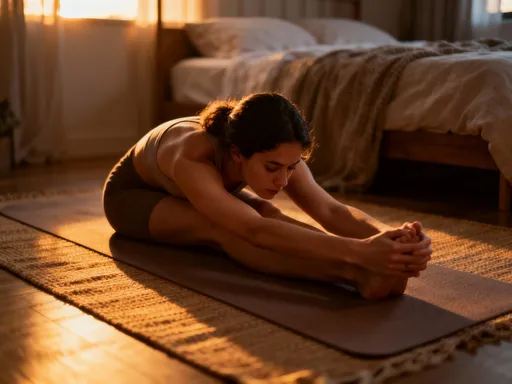
I began with slow walking around my living room for five minutes—just enough to loosen stiff muscles from sitting all day. Then, I moved to a yoga mat and performed shoulder rolls to release tension built up from computer work. Next came the cat-cow stretch, a gentle flow between arching and rounding the back, which helped synchronize my breath with movement. I finished with seated forward folds and side stretches, holding each pose for 20–30 seconds while focusing on deep, even breathing. The entire sequence required no special skills, equipment, or fitness level—just a quiet space and a timer to keep me on track.
Within three nights, I noticed a difference. I fell asleep faster and woke up feeling more refreshed. By the end of the first week, my sleep felt deeper and more continuous. I no longer dreaded bedtime; instead, I looked forward to this quiet ritual as a signal to my body that the day was truly ending. The emotional shift was just as significant as the physical one. I felt calmer, more in control, and less anxious about not sleeping. This wasn’t about achieving perfection—it was about creating a sustainable practice that fit into my real life.
What surprised me most was how little effort it took to see results. I didn’t need expensive gear, a gym membership, or hours of time. The routine was short, quiet, and adaptable. On nights when I felt too tired to stand, I modified it to include only seated stretches. On others, I extended it by a few minutes. The flexibility made it easy to stick with, even on busy or emotionally draining days. Over time, this small habit became a cornerstone of my self-care routine, proving that meaningful change doesn’t require grand gestures—just consistency and intention.
The Science of Calming the Nervous System
The reason this simple routine worked so well lies in its effect on the autonomic nervous system. The body operates on two main modes: the sympathetic system, which prepares us for action, and the parasympathetic system, which supports rest, recovery, and digestion. Most people spend their days in a state of low-level activation—responding to emails, managing tasks, solving problems—all of which keep the sympathetic system engaged. Without a deliberate transition, the body struggles to switch gears at night, leading to restlessness and insomnia.
Gentle movement acts as a bridge between these two states. Think of your body like a car—after a long day of being in “drive,” gentle movement helps it shift smoothly into “park.” Unlike sudden stops or aggressive braking, this transition is gradual and calming. Slow, rhythmic motions such as stretching or mindful walking stimulate the vagus nerve, a key component of the parasympathetic system. Activation of this nerve slows the heart rate, reduces blood pressure, and promotes a sense of calm. This physiological shift creates the ideal internal environment for sleep.
Another important mechanism is muscle relaxation and its impact on core body temperature. After physical exertion, the body experiences a natural cooldown phase. During this time, blood flow shifts from internal organs to the skin’s surface, releasing heat. A slight drop in core temperature is one of the strongest biological signals that it’s time to sleep. While intense exercise causes a larger spike in temperature followed by a more dramatic cooldown, gentle movement produces a milder but still effective thermal shift—enough to support sleep onset without causing discomfort or overstimulation.
Research supports these effects. A 2019 study published in the Journal of Clinical Sleep Medicine found that participants who engaged in regular stretching exercises before bed experienced significant improvements in sleep efficiency and reduced wakefulness after sleep onset. Another trial involving adults with mild sleep disturbances showed that a nightly routine of light movement and deep breathing led to faster sleep onset and improved overall sleep quality. These benefits were observed without changes in diet, medication, or other lifestyle factors, highlighting the power of simple, consistent practices.
Designing Your Own Evening Routine
Creating a personalized evening movement routine doesn’t require expertise or complexity. The goal is not to achieve a certain level of fitness, but to support relaxation and prepare the body for rest. Start with a timeframe of 10 to 20 minutes—long enough to make an impact, short enough to be sustainable. Choose low-intensity movements that feel soothing rather than challenging. Focus on flow and awareness, not effort or performance. This is not a workout; it’s a wind-down ritual.
Begin with simple joint mobilizations, such as ankle circles, wrist rotations, or neck rolls, to release stiffness from prolonged sitting. Add in gentle stretches like side bends while seated, forward folds, or butterfly pose. Incorporate slow, deliberate breathing—inhaling through the nose for a count of four, holding for two, and exhaling slowly for six. This breathing pattern enhances parasympathetic activation and deepens the calming effect of movement. You might also include tai chi-inspired movements or basic yoga sequences like child’s pose or legs-up-the-wall, both of which are known for their restorative benefits.
Timing matters. Aim to start your routine 60 to 90 minutes before bedtime. This allows enough time for the body to respond to the movement, cool down, and transition into sleep mode. Avoid doing it too close to bed, as even gentle activity may briefly increase alertness. Also, avoid any form of fast-paced or jarring motion—jumping jacks, burpees, or rapid transitions—that could stimulate the nervous system. Keep the energy soft, the pace slow, and the focus inward.
Consistency is more important than duration or complexity. Even five minutes of intentional movement can make a difference when done regularly. The key is to make it a habit, not a chore. Pair it with another calming activity, such as sipping herbal tea or dimming the lights, to strengthen the association between this routine and sleep. Over time, your body will begin to recognize the sequence as a signal that it’s time to rest, making it easier to fall asleep and stay asleep.
Pairing Movement with Other Sleep-Friendly Habits
While evening movement can significantly improve sleep, it works best as part of a broader approach to sleep hygiene. The body and mind respond to multiple cues, and combining physical preparation with environmental and behavioral strategies enhances overall effectiveness. Dimming the lights in the evening, for example, supports the natural rise of melatonin by signaling to the brain that daylight is fading. Reducing screen exposure—at least one hour before bed—minimizes blue light, which can suppress melatonin production and delay sleep onset.
Consistency in bedtime and wake time, even on weekends, helps stabilize the circadian rhythm. When the body expects sleep at roughly the same time each night, it becomes easier to fall asleep and wake up naturally. Combining this with a calming pre-sleep routine—such as reading a physical book, journaling, or listening to soft music—creates a powerful synergy. Movement prepares the body; environment and routine prepare the mind.
Tracking progress can also be helpful, though not through apps or devices that may add pressure. A simple handwritten journal, where you note how you felt before and after the routine, how long it took to fall asleep, and your energy the next day, can reveal subtle patterns. You may not notice changes immediately, but over time, the journal can provide valuable feedback and motivation. It also helps identify what works best for you—perhaps certain stretches are more effective, or starting earlier in the evening yields better results.
It’s important to remember that no single habit is a cure-all. Sleep is influenced by many factors, including diet, hydration, mental health, and underlying medical conditions. Evening movement is one supportive piece of a larger puzzle. When integrated with other healthy practices, it amplifies their benefits and creates a more resilient foundation for restful sleep.
When to Seek Professional Guidance
While gentle evening movement is safe for most people, it is not a substitute for medical care. If you continue to experience chronic insomnia, frequent nighttime awakenings, or excessive daytime fatigue despite making lifestyle changes, it’s important to consult a healthcare provider. Conditions such as sleep apnea, restless legs syndrome, hormonal imbalances, or mood disorders can significantly disrupt sleep and require professional diagnosis and treatment.
Similarly, if you have a pre-existing medical condition—such as cardiovascular disease, chronic pain, or mobility limitations—talk to your doctor before starting any new physical routine. While gentle stretching and low-impact movement are generally low-risk, individual health needs vary. A healthcare professional can help you adapt the practice to your specific situation, ensuring safety and effectiveness.
The beauty of this approach lies in its accessibility and sustainability. It doesn’t demand perfection or drastic changes. It invites small, consistent actions that accumulate into meaningful results over time. Wellness is not about extreme efforts or quick fixes. It’s about making smart, compassionate choices that honor your body’s needs. By incorporating gentle evening movement into your life, you’re not just improving sleep—you’re cultivating a deeper connection with yourself, one quiet moment at a time.
In conclusion, intentional, gentle evening movement can significantly enhance sleep quality by aligning the body’s physical state with its natural rhythm. It calms the nervous system, supports hormonal balance, and creates a smooth transition from wakefulness to rest. Backed by science and adaptable to real-life demands, this practice offers a practical solution for those struggling with sleep. Rather than viewing sleep as a passive event, we can begin to see it as a dynamic process—one that we can gently shape through movement, awareness, and consistency. Start simple. Stay patient. Let your body lead the way.